STRIVE delivers the missing data needed for smarter forecasts that protect American citizens, businesses, and natural resources
STRIVE: The Key to Unlocking Atmospheric Understanding
The upper troposphere and lower stratosphere (UTLS) is a transition region characterized by steep gradients and high temporal variability in atmospheric composition and temperature. Within the UTLS, complex connections between chemistry, dynamics, and radiation are driven by fine vertical and horizontal scale processes that occur on short timescales, yet have lasting and widespread influence. These processes include convection in severe storms, high cloud formation, atmospheric waves, and emissions from large fires and volcanic eruptions, which influence the ozone layer, climate, extreme weather events, and air quality.
Accurately representing these complex processes in global Earth system models presents significant challenges, resulting in forecast uncertainties. While current satellite limb sounders have advanced in our understanding of large-scale UTLS variability, their coarse vertical resolution (3-5 km) and limited sampling hinder detection of finer scales critical to capture stratosphere-troposphere interactions.
STRIVE Efficiently Returns Valuable Insights
STRIVE delivers transformative high-resolution observations of the UTLS by measuring infrared radiation emitted and scattered from the atmospheric limb to provide profiles of atmospheric constituents and temperature with fine vertical resolution (1 km) and unparalleled horizontal sampling (>400,000 profiles daily). STRIVE generates 2-4 orders of magnitude more profiles and greater horizontal coverage than current limb instruments.
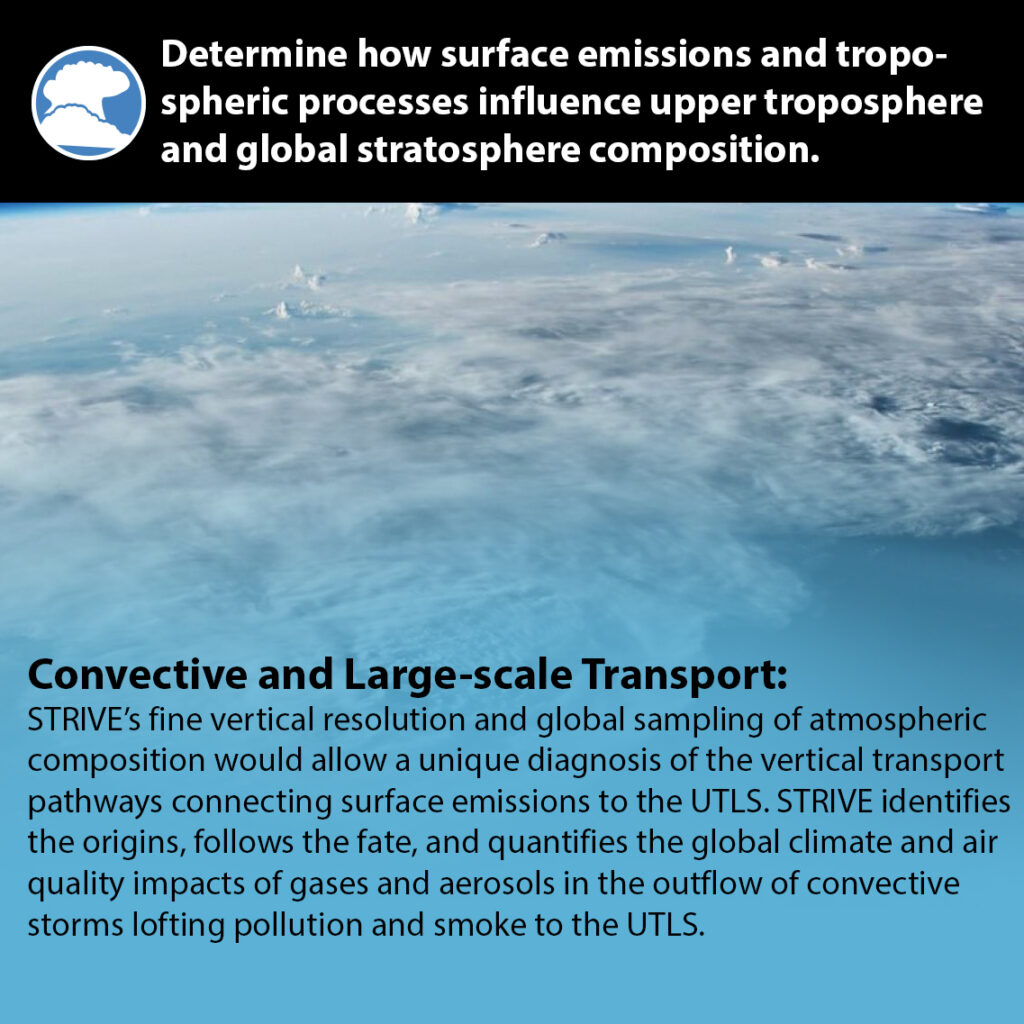
Convective and Large-Scale Transport
Determine how surface emissions and tropospheric processes influence the composition of the upper troposphere and global stratosphere.
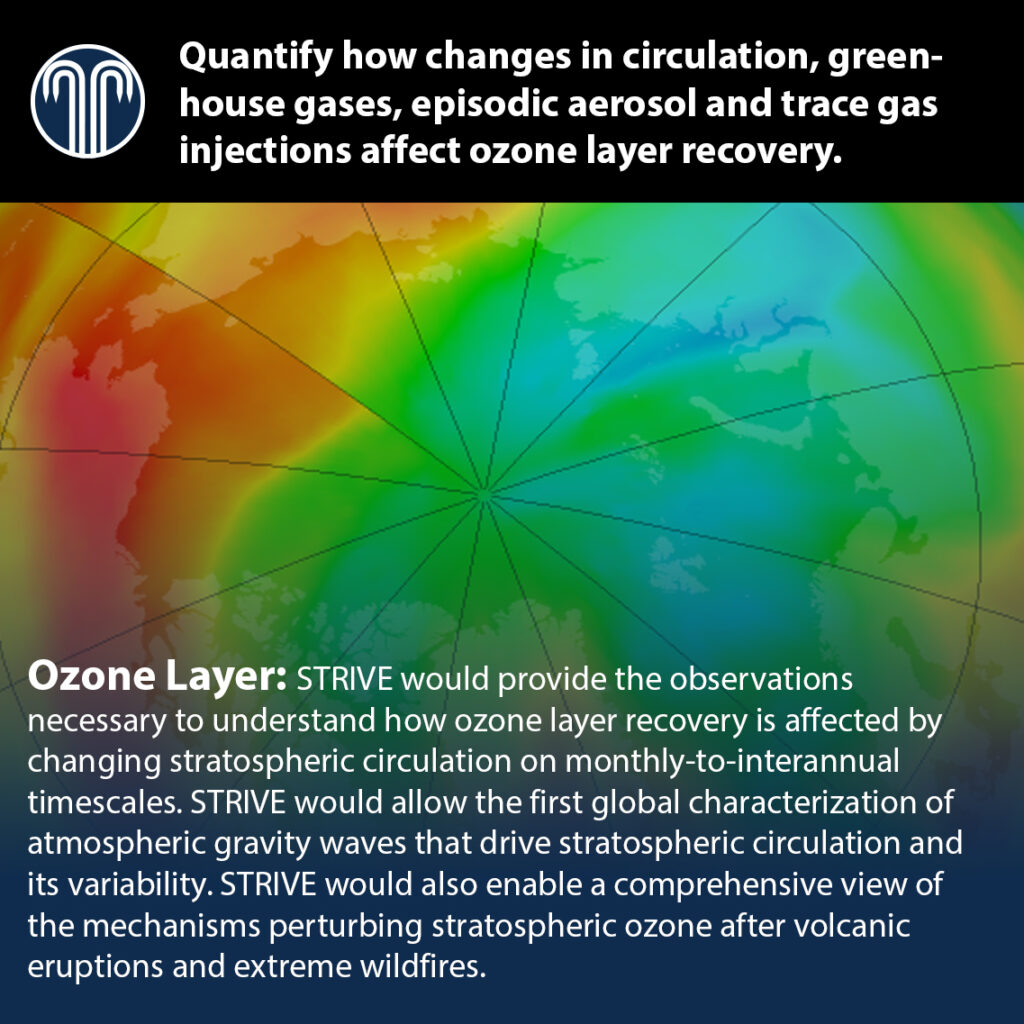
Ozone Layer: Quantify how changes in circulation, greenhouse gases, ozone depleting substances, as well as episodic aerosol and trace gas injections, affect recovery of the ozone layer.
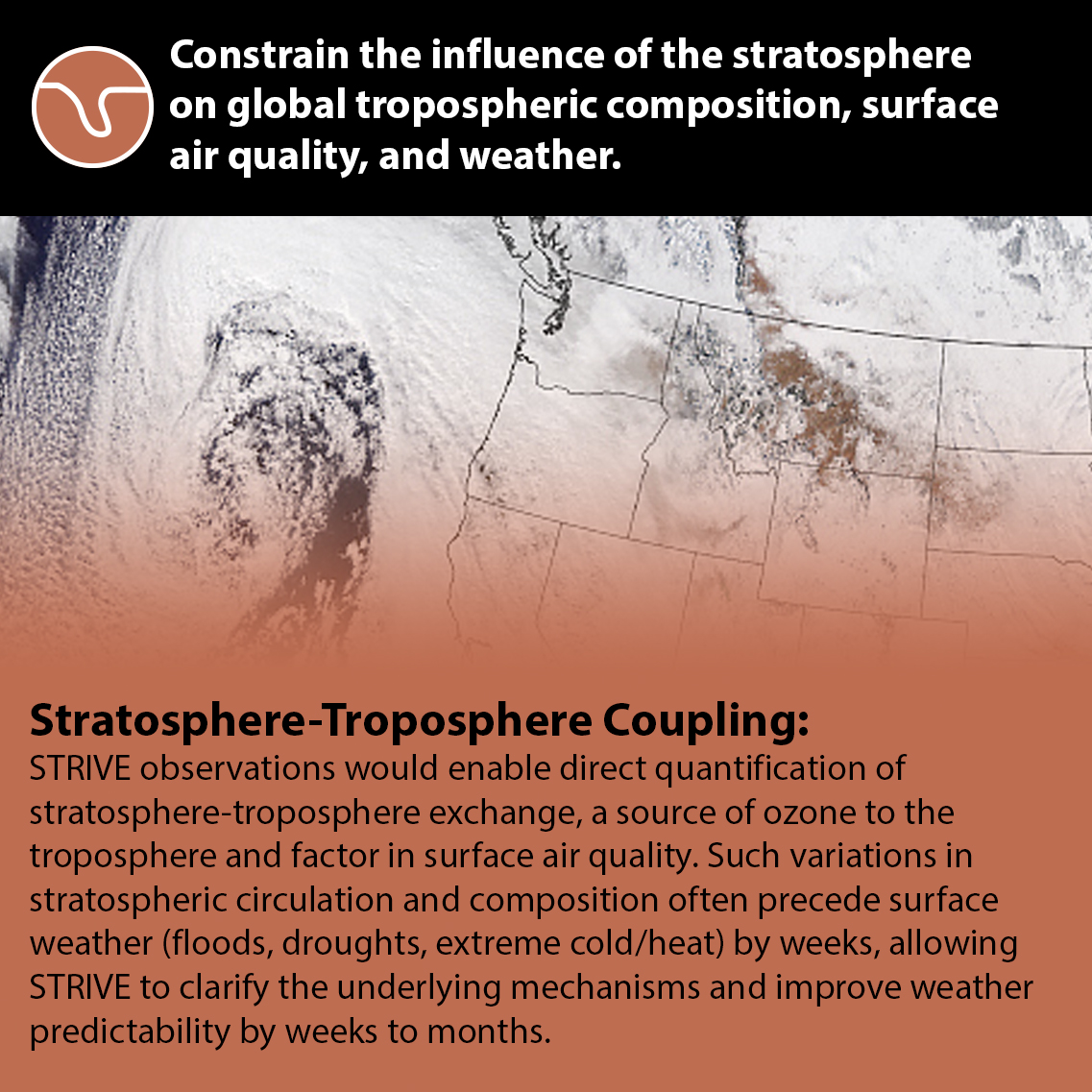
Stratosphere-Troposphere Coupling: Constrain the influence of the stratosphere on global tropospheric composition, surface air quality, and weather.
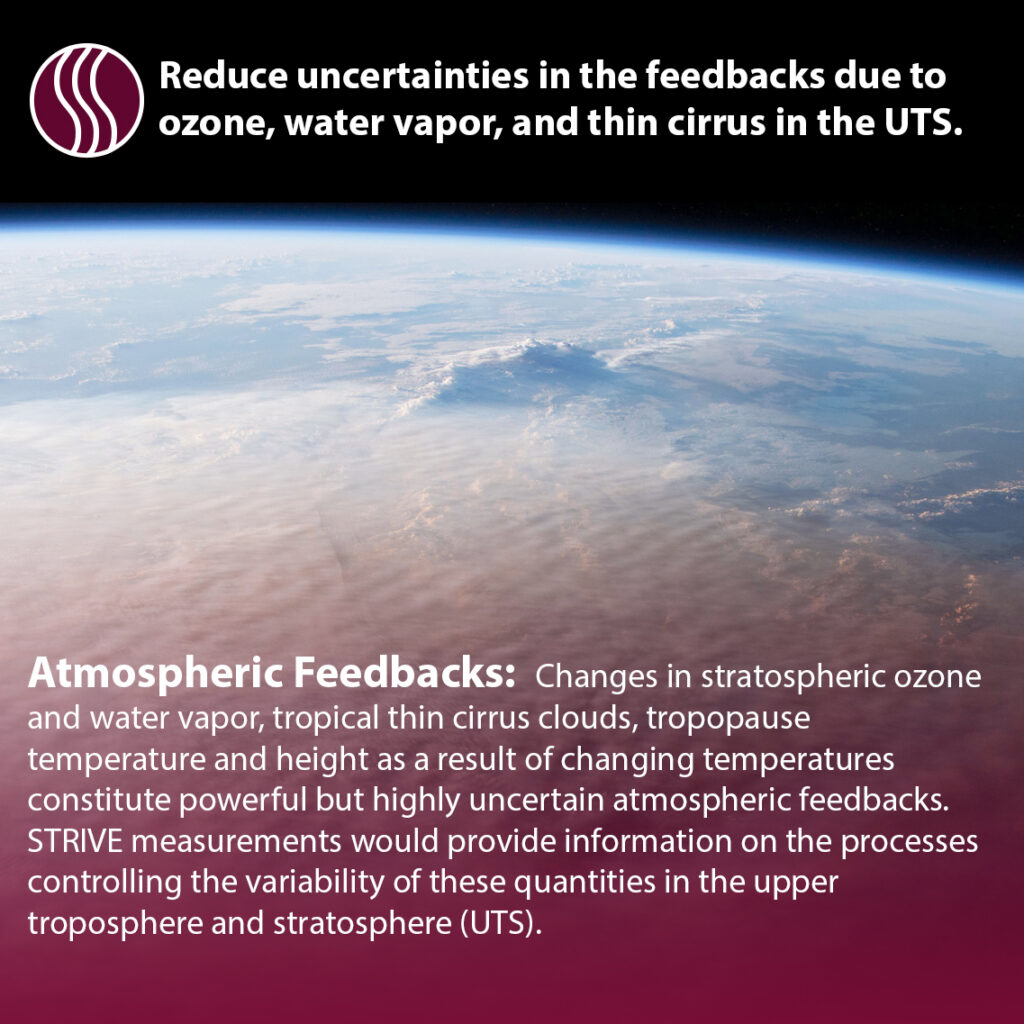
Atmospheric Feedbacks: Reduce uncertainties in the feedbacks due to ozone, water vapor, and thin cirrus clouds in the upper troposphere and stratosphere.
Transformative Coverage: STRIVE will collect more than 400,000 profiles each day. In 2 months, STRIVE delivers the same number of profiles that MLS/Aura, NASA’s current gold standard for atmospheric composition, did in 20 years.
High-resolution Insight: STRIVE delivers 1 km vertical detail from 5 to 70 km altitude, capturing fine-scale processes that current satellites miss.
Comprehensive Measurements: STRIVE retrieves vertical profiles of temperature, trace gases (O3, H2O, CH4, N2O, CFC-11, CFC-12, CO, HCN, NO2, HNO3, ClONO2, N2O5), and the properties of high-altitude clouds and aerosols.