| Mercury barometer. Atmospheric pressure forces mercury up the class tube, which contains a vacuum above the mercury. Pressure is indicated by the height of the mercury column in inches or centimeters (the average surface value is 29.92 inches). |

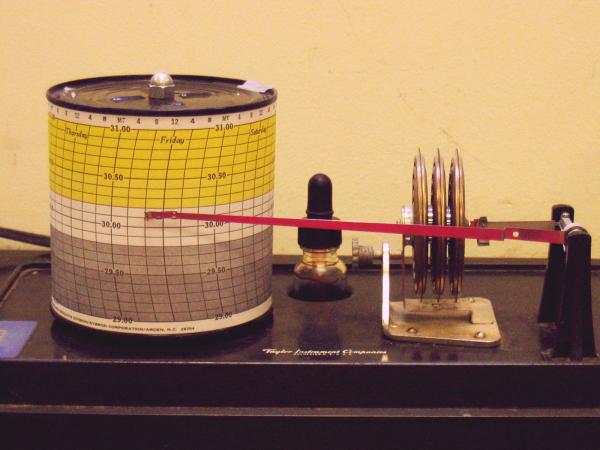
| Aneroid barometer. The chamber contains a partial vacuum that expands and contracts for small pressure changes. The linear motion of the chamber is converted into radial motion for display on a dial. |
|
|