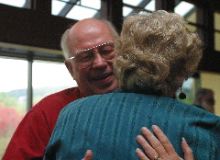
Dear Family and Friends,
As you should well have guessed, Rachel's organization of the
Retirement party for me was a complete surprise. I had no clue even
when we bumped into Bob and Marsha walking in; Rachel told me that she
somehow managed to indicate to them that I wasn't aware, which
certainly was the case. I can't express my appreciation enough for
this and the well wishes I received from others. My birthday was
Oct. 3 and since her husband's, Bryan, was Oct. 5, we were just going
out to eat dinner together. I assumed her dress was for the party she
and Bryan were going to afterwards.
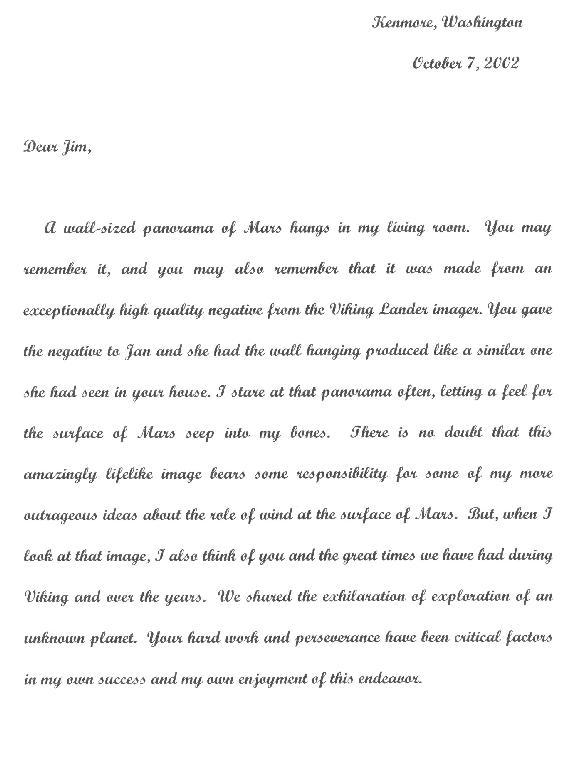
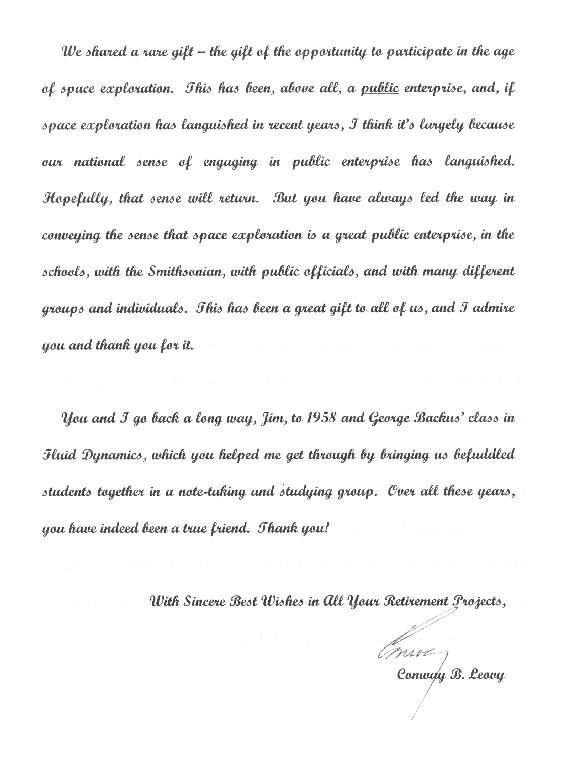
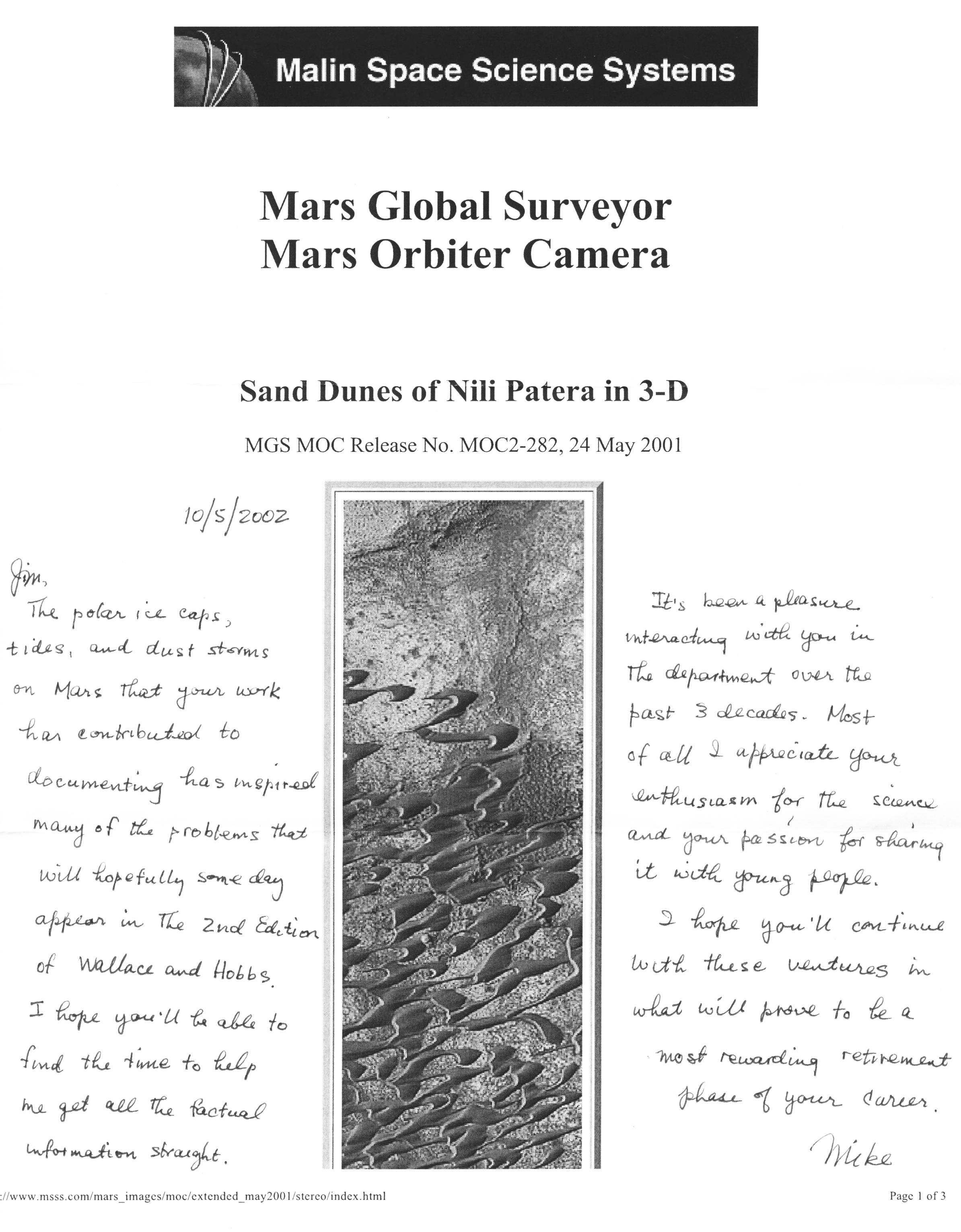
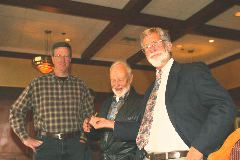
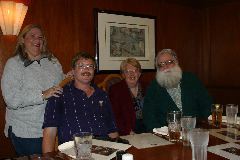
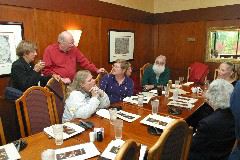
I held off writing this, hoping that Rachel could find the tapes of that night, which unfortunately seem to be carefully stored somewhere. I wanted them for this since my verbal memory always was poor. The fact that the tapes existed is shown in the first image of Conway using the tape recorder. Since I can't quote from them, I am including a few of your gracious comments. I need to put together a name list for those not familiar with some of the others; it will be done sometime, but not too soon.
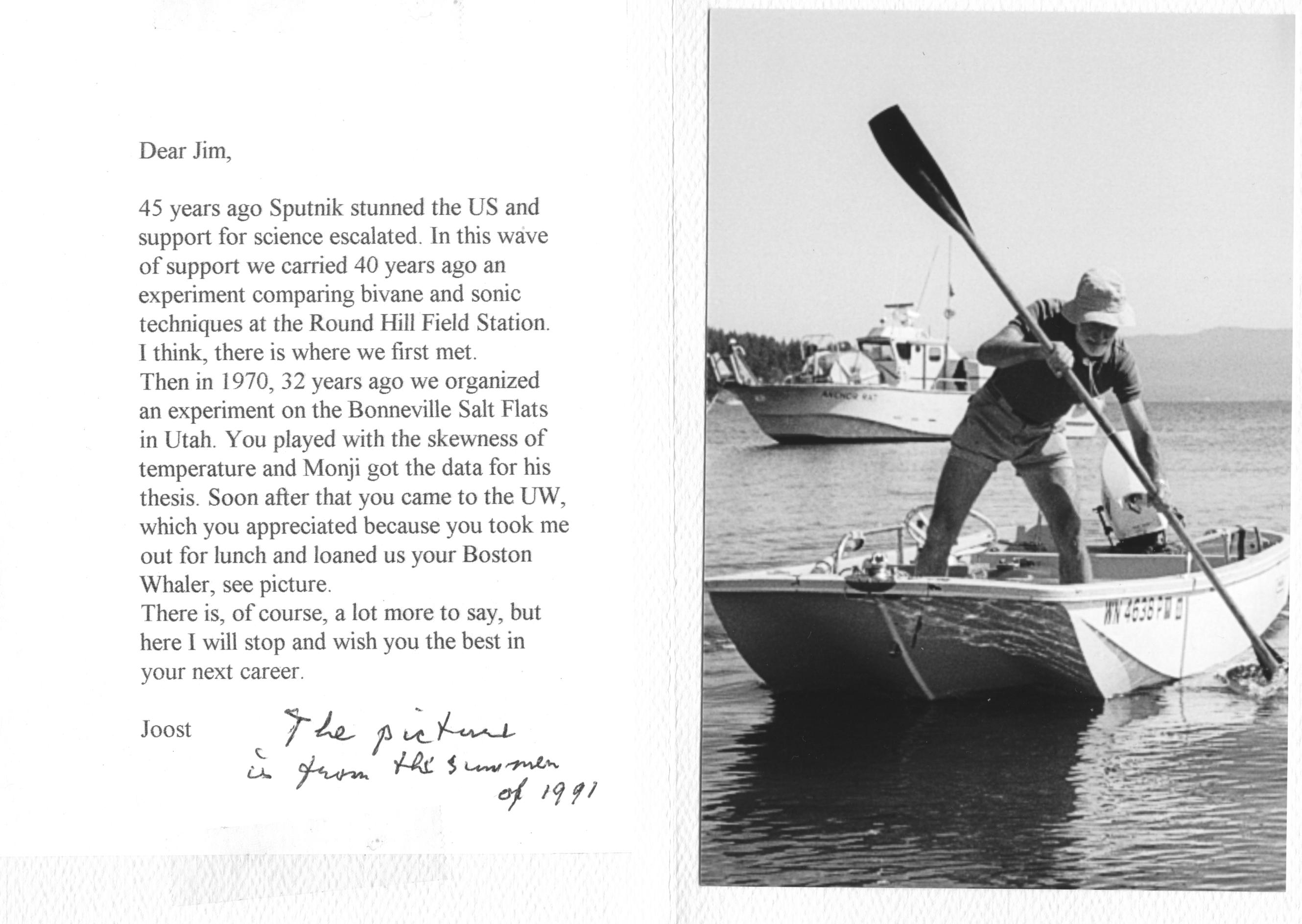
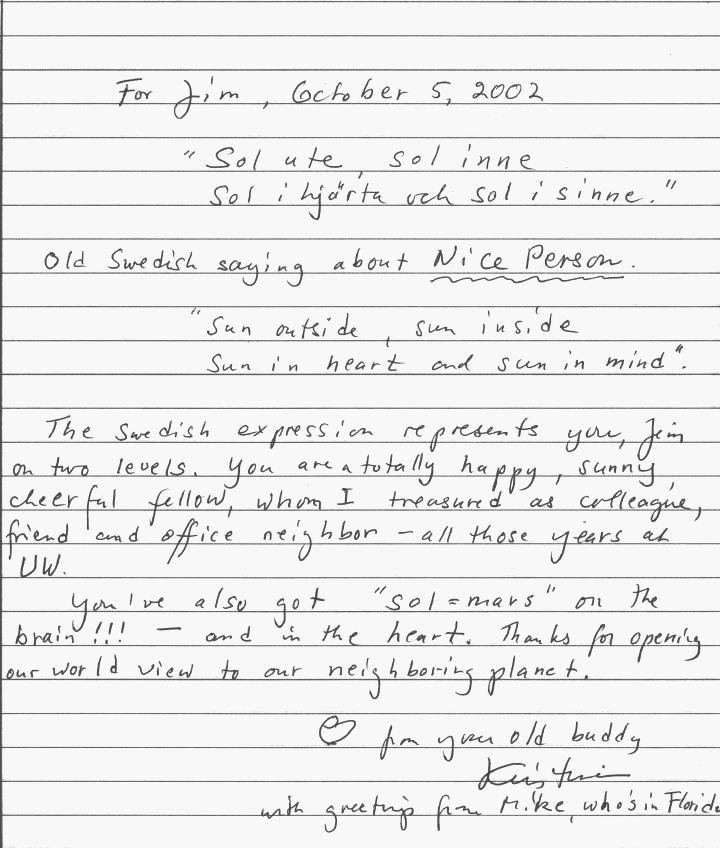
I want to express our sincere thanks to Joost Businger, without whose invitation to UW we would never had this great opportunity and to Conway Leovy, who is a responsible co-conspirator in many of my Viking Mars Activities. My appreciation goes out to Risto Pellinen and Ari-Matti Harri of the Finnish Meteorology Institute for their fabulous interactions in Mars missions, culminating in our Mars "Climate Lander", MetNet, program now being implemented. I have thoroughly enjoyed working with Fred Weller, Neal Johnson, David Warren, Harry Edmon, and Kristina Katsaros to mention a few who have helped me explore boundary layers on a couple of planets. Thanks to my Mother who told me to go to the top when presented with a problem; its HER FAULT when I go astray and credit when I succeed. Finally, with such great family, friends and colleagues, a few positive results are inevitable.
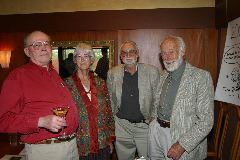
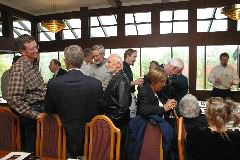
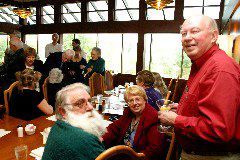
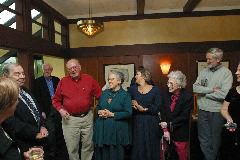
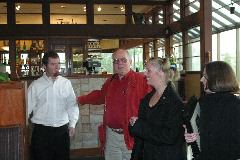
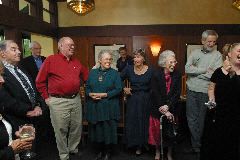
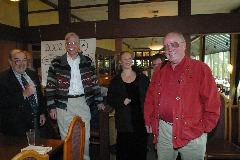
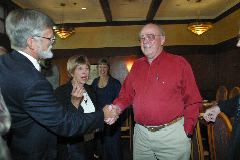
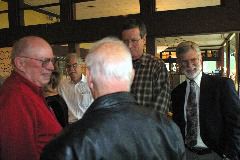
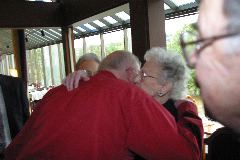
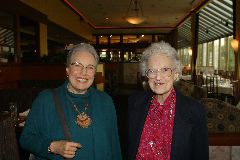
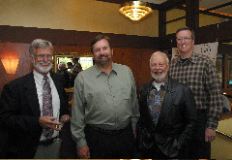
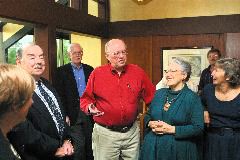
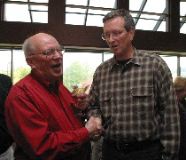
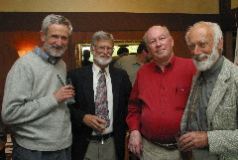
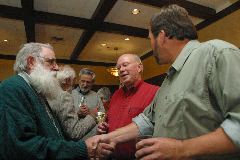
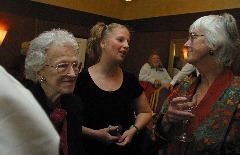
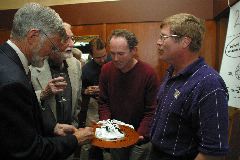
Although I took a few photos, these were taken by Jim who earns his living as a photographer. He most often shoots catalog for REI, Bon, etc. but is also known as the person to contact in Seattle for difficult problems. Recently someone reccommended him for a World Affairs Council presentation by Condoleezza Rice, where he took 87 Portraits along with other shots.
The photos and web site can be found at, http://www.atmos.washington.edu/~mars/Retirement/
| ? Where are the missing MarsGate
tapes ?
|
|
|
|
|
|
|
|
|
|
|
|
|
|
|
|
|
|
|
|
|
|
|
|
|
|
|
|
|
|
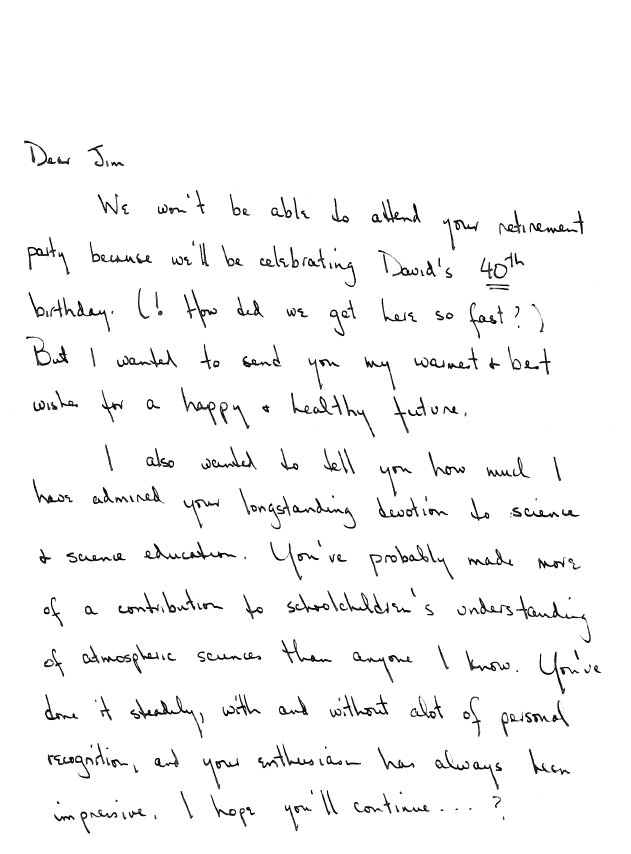
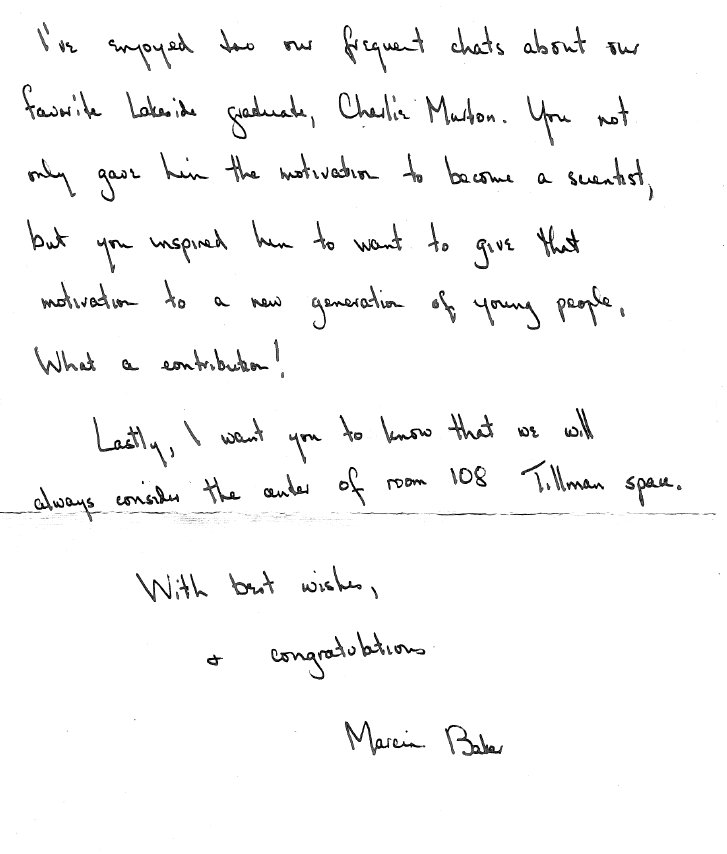
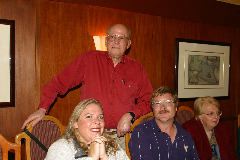
Marsha Baker and Page 2
Conway Leovy and Page 2
More of your good wishes will be scanned.
Prof. Tillman, Jim,
you gave me my first job in research science. At the time I was senior in high school. I held two jobs that summer, one was working daytime for you programming computers for the noble mars meteorology mission. The other was at night selling magazine subscriptions as a member of the up-and-coming telephone solicitor industry. By day I earned minimum wage and by night...well I remember you saying it was more than a professor's salary when I told you. Apparently I did not learn from this experience as I am now a research scientist :-)
I don't think I ever did any work of which I was more proud. The work was challenging and success was thus satisfying. It was the first time I got to put together all my skills, and the first time I had to teach myself something new so I could accomplish something. At the end of the summer I was convinced I had utterly failed since by then I cold see how I could have done it over much better. I had decided to tell you I wanted to give back all the wages i had been paid because I had not earned them. Before I could you came in and told me how much I had accomplished and offered to put my name on the paper. Which was exactly the right word at the right time. And presumably why when you hear my voice on the phone, it's not asking if you are happy with your long distance service. Of course, I foolishly turned down your authorship offer, not appreciating that research is by its nature usually imperfect, and unfinished.
And really there could not have been a better preparation for my later years in graduate school. It was not the work specifically, but the aspect of being challenged by someone you respect. The work was not a defined chore as might be given to a lot of high schoolers, but mostly just a goal. You expected a lot for my age, gave me the right tools, but did not give me a road map a to how to do it. Thus I learned about guiding oneself and answering your own questions.
Over the years, our correspondence has been intermittent: I've tended to get in touch with you after each segment of my career, college, grad school, first "job", and other times when one looks back on the arc of ones life. Obviously, in the back of my mind was how in hindsight so many things traced back to my first experiences in science.
So I have a lot to thank you for. I'm sure there have been many more you have sent on their way too. And of course as I have my own students encountering their first research I try to challenge them yet make them succeed. It's a wonderful gift to pass along. For all the great science you have done, the heroic role you played in the Mars lander, and the discoveries you made, it may very well be your greatest impact is your work with school children. Of course, "retirement" from the U of W just means you now have more time to work on the next lander and the next school kid. Lucky you.
charlie strauss
Bioscience Division
Los Alamos National Laboratory.
Ingo's Pond
CASP4
Fourth Community Wide Experiment on the Critical
Assessment of Techniques for Protein Structure Prediction (CASP4)
One of the most important unsolved problems in Molecular
Biology is
the protein folding problem, which can be stated simply as: given the
sequence of amino acids of a protein, what is its three dimensional
structure? What makes this problem so important is the fact that the
structure of the protein determines its function. However, the gap
between the number of known amino acid sequences and the number of
known three dimensional structures grows rapidly. ... Therefore
a computational solution of this problem is more than
desirable. ... One of the key ingredients of ROSETTA is a scoring
function that assigns a score to three-dimensional structures and
guides the search from the extended chain to a protein-like fold.
We (the Baker lab) used our folding routine in this year's structure
prediction competition (CASP4), and it was quite successful.
To compare the
quality of the predictions of the
various groups, the submissions for CASP4 were scored by the
organizers (2 points for a largely correct prediction, 1 point for a
somewhat correct prediction, 0 points otherwise).
The histogram in the left panel below
shows the total scores
for all groups that submitted predictions for ab initio targets. Since
predicting three-dimensional protein structures takes many recources
(computer
and people time), not all labs were able to submit as many targets as
we
did, and one could argue that displaying the results as cumulative
scores,
the way it was done in the histogram on the left, was not completely
fair
to smaller labs. To account for that, we also show the average score
per
target submitted (for labs that submitted predictions for more than 5
targets).
These data, as a measure of reliability, are shown in the right panel
below.

The UW Baker Lab might not have produced such stunning results if I hadn't hired Charlie Strauss, responsible for this breakthrough, to work on Viking Meteorology data while in high school, thereby helping launch his research career. This dramatically demonstrates the impossibility of predicting the most important benefits of early "venture education" investments in our youth. Jim Tillman, Oct. 2001
For a fair comparison of existing protein structure prediction methods developed in various labs around the world, a semi-annual community wide blind test was implemented. For the Community Wide Experiment on the Critical Assessment of Techniques for Protein Structure Prediction (CASP), some newly solved three-dimensional structures of proteins are withheld, and only their sequences are made public. The structure of those proteins will not be published until a given deadline, which gives CASP participants the chance to submit their predictions for the proteins.My recent, present and future programs consist of a suite of interrelated educational components Live From Earth and Mars -- Science, Technology, Education Partnerships, LFEM -- STEP , a PowerPoint presentation.
These programs have two atmospheric sciences components that are an intergral part of our third component, the Mars MetNet "Climate Lander" program.
"Although you can't yet take a classroom of students to Mars, you can use the weather data collected during the Pathfinder and Viking missions, now available on the Web, to offer students the opportunity to explore the environment on and near the surface of Mars. By conducting schoolyard investigations similar to those done during the Pathfinder and Viking missions, students can compare their own data about the weather on Earth to those collected by scientists who studied the weather on Mars, and with students in other schools throughout the world. This elementary school curriculum includes lessons that incorporate both classroom and Web-based components."
Besides its educational value, the TEM program and collaborators provide a unique research opportunity. In 1972 I published a paper "Tillman, J. E., The Indirect Determination of Stability, Heat and Momentum Fluxes in the Atmospheric Boundary Layer from Simple Scalar Variables During Dry Unstable Conditions, J. App. Meteor, Vol. 11, pp. 783-792, 1972." This described how to estimate near the surface, the heat flux and atmospheric stability from temperature statistics at a single height. This also provides an estimate of the momentum flux, since it is defined by these two parameters. This is extremely useful since temperature is readily measured while the direct measurement of the others requires far more and/or complex instrumentation. I haven't kept up with this thru the past decade or two, but I believe that only the Australians and Europeans have used the heat flux estimation techniques or investigated its accuracy and applicability.
During TEM observations and experiments in grades probably above 8, it is very simple make measurements at multiple heights and evaluate the consistency of my hypothesis from multiple measurements at several heights within the lowest few meters of the boundary layer. This would provide high school students with good statistical applications and help evaluate the applicability of such techniques under uniform and highly inhomogeneous conditions, anywhere on Earth. Direct measurements require equipment costing tens of thousands of dollars, research professionals, and very careful installation. As shown below, all of the components of our temperature investigation were carried out during one class exercise with a 4-5th grade class, a portable data logger, a laptop computer and thercouples on a 2 meter piece of tubing. From these observations, one can investigate the self consistency of these temperature characterizations at a single location. They are simple enough to carry out at multiple locations simultaneously, investigating variations over homogeneous, and over inhomogeneous terrain such as this baseball field on Magnolia in Seattle.
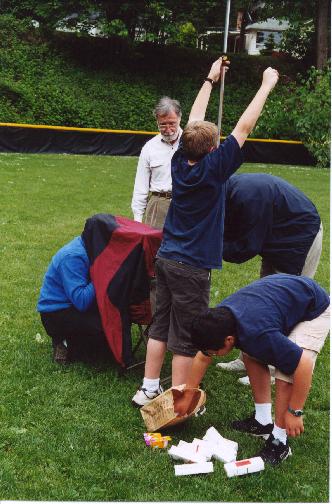
Students plugging sensors in the mast,
David Warren setting up the laptop computer to record and display the
output from the Campbell data logger purchased by University Rotary
for these programs. Dr. Don Sandstrom is hooking up thermocouple
sensors to the Campbell, 4-5th grade students are plugging in the
thermocouples, while volunteer Bob Blaisdell is in background.
These are my future Boundary Layer Meteorologists.
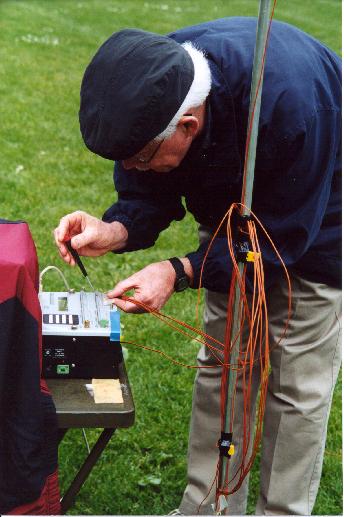
Volunteer Dr. Don Sandstrom hooking mast thermocouples to the
Campbell data logger purchased by University Rotary for these programs.
June 14, 2001
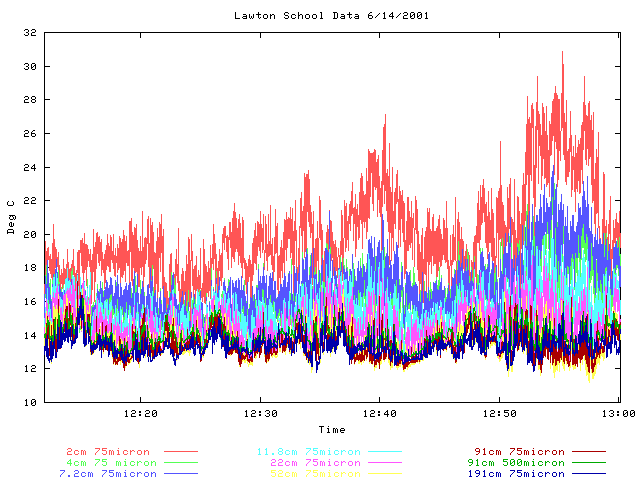
This plot includes all of the sensors from approximately 1-2 cm above the mean height of the grass up to 191 cm. The lowest, and warmest sensor, is red. The recording begins at 12:11 and continues to 13:00.
The first two of the three groups made measurements during this day. They made two sets of specific observations; the first was with their sensors lying on the ground at about the 1 cm level, and the second at the 91 cm level. Due to the crowded schedule I don't think they got to explore the results much. One 5th grade girl asked me to explain the temperature decreases between 2 and 91 cm, and the variability. She wanted to know about the motions of the warm air parcels (heated by the sun on the grass), formed and interacted with the cooler ones after I simply described the immediate surface layer heating
For less than the inflation adjusted cost of the Viking Meteorology instruments, we can put four, multi-year Meteorology Climate Stations on the surface of Mars.