Grad Student Eric Mei, Profs. Alex Turner and Greg Hakim’s paper published on PNAS
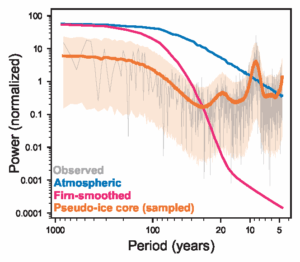
Methane is a powerful greenhouse gas influenced by both human and natural processes. A recent PNAS study by graduate student Eric Mei and Professors Alex Turner and Greg Hakim finds that multidecadal to centennial variability in preindustrial methane levels preserved in ice cores may not require slow climate changes or human activity to explain, but may instead arise from short-term, random fluctuations in the balance between methane sources and sinks, such as year-to-year changes in wetland or fire-related emissions. The results suggest that past methane variability may reflect processes similar to those driving modern year-to-year changes in methane growth.
This study is featured on UW News, and you can read the paper here.
UW Ranked 3rd on Carbon Brief’s Cosmos 500
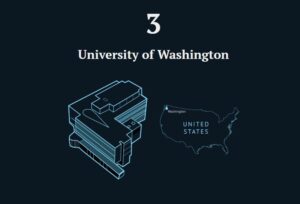
Carbon Brief’s analysis of its Cosmos database identifies the world’s leading institutions for climate research. The database includes more than 40,000 organizations, including universities, research laboratories, policy institutes, and government bodies, with each assigned a publication count based on how often its experts appear as authors. This analysis forms the basis of the Cosmos 500 rankings, which highlight the 500 institutions with the highest publication counts alongside top authors and publications.
The University of Washington is ranked as the third most highly cited organization with a score of 662,032. The Department of Atmospheric and Climate Science, Program on Climate Change, and Climate Impacts Group are highlighted in the ranking.
See the full ranking on Cosmos 500.
Chris Wright and Alli Moon received Outstanding Paper Awards
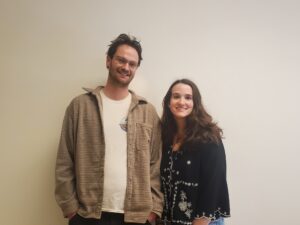
Chris Wright’s paper on lightning in shipping tracks published in ACP has been selected as a runner-up for the 2025 Paul Crutzen Publication Award.
Alli Moon’s paper on primary sulfate in Fairbanks, AK has been selected for ACS ES&T Air’s 2024 Best Paper Awards.
Congratulations to Chris and Alli, and thank you to all the co-authors!
Prof. Lynn McMurdie, Grad Student Valeria Garcia, Postdoc Troy Zaremba featured on CBC News
Recently, Professor Lynn McMurdie, graduate student Valeria Garcia, and postdoc Troy Zaremba joined the NASA research mission, North American Upstream Feature-Resolving and Tropopause Uncertainty Reconnaissance Experiment (NURTURE), based out of Labrador, Canada. The research team is flying directly into developing storms to gather data from largely unmeasured parts of the Arctic atmosphere. Using specialized aircraft and instruments, the team studies clouds, moisture, and energy exchanges in the North Atlantic and Arctic regions to improve weather forecasting models, particularly for rapidly changing and hard-to-predict systems. Researchers say the data collected could lead to more accurate forecasts days in advance, benefiting everything from daily weather predictions to aviation safety and climate research, especially in northern regions where current data gaps make forecasting more difficult.
Read the full article on CBC News.
Grad Student Cong Dong and Prof. Qiang Fu featured on UW News
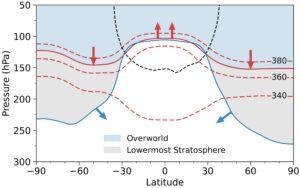
“Methane stays in the atmosphere for approximately 10 years before it is removed. Researchers need to know how much methane is removed to gauge what percentage of emissions are accumulating in the atmosphere, but the methane removal process is difficult to measure. Historically, researchers have relied on chemistry-climate simulations to predict methane removal, but the accuracy of this approach is debated. Professor Qiang Fu and graduate student Cong Dong’s new study presents a value based on satellite data that suggests more methane loss in the stratosphere than previously thought.”
Read more about the study on UW News and PNAS.
Grad Student Kyndra Buglione and Prof. Roger Marchand featured on ARM
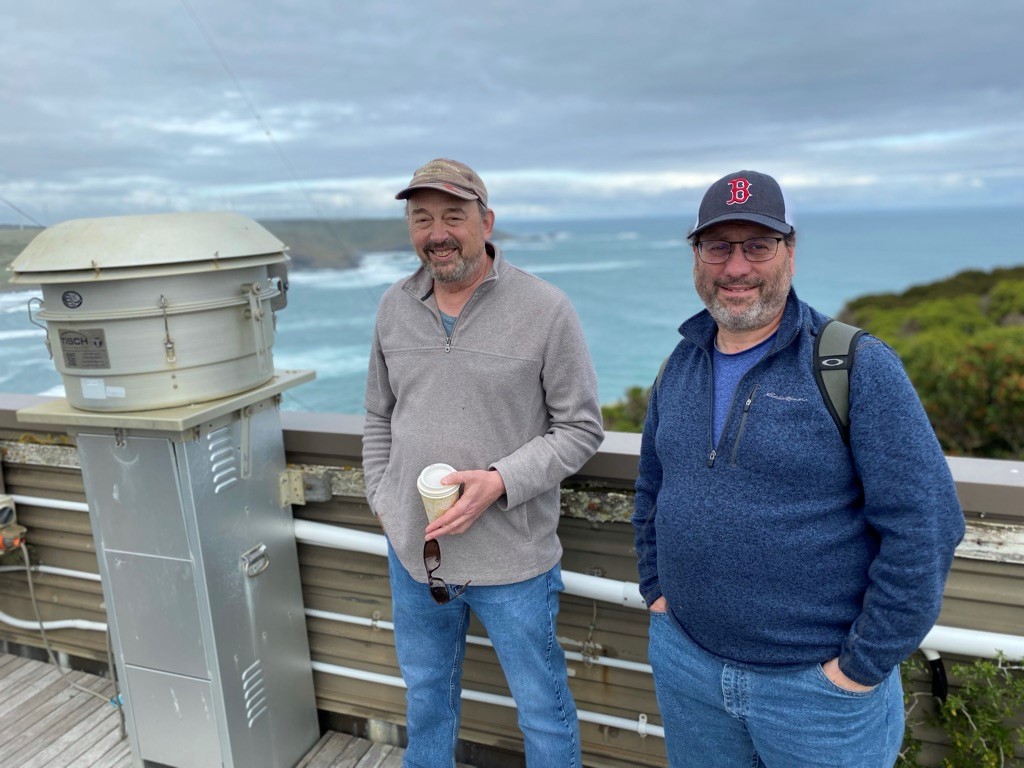

“In October 2025, after 18 months of detailed atmospheric observations from Australia’s southernmost state, the U.S. Department of Energy’s Atmospheric Radiation Measurement (ARM) User Facility wrapped up the Cloud And Precipitation Experiment at kennaook (CAPE-k) in Tasmania. The scientific goal of CAPE-k was to capture a complete seasonal cycle of cloud and precipitation observations to help researchers improve understanding and modeling of related processes over the Southern Ocean. This region has long posed challenges for accurate simulation.” Professor Roger Marchand was one of the Co-PIs in this campaign, and grad student Kyndra Buglione attended the CAPE-k student workshop in February 2025, along with 14 instructors and 27 students from the United States, Australia, and Europe.
To learn more about the campaign, read it here.
Prof. Dale Durran featured on NYC’s Channel 5 News
Professor Dale Durran was interviewed by New York City’s Channel 5 News about AI weather forecasting. The segment also features Professor Amy McGovern from the University of Oklahoma.
The segment starts at 7:16, watch the interview here.
Knut von Salzen, Prof. Sarah Doherty, and Prof. Rob Wood featured on UW News
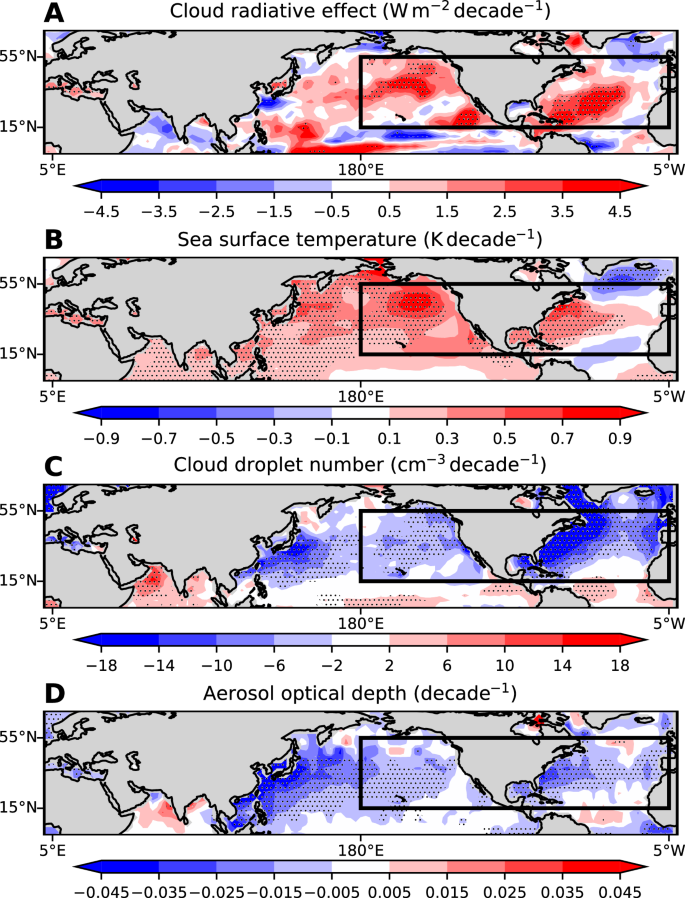
New research out today in Nature Communications helps explain recent surges in global warming. The study, led by Knut von Salzen, Professor Sarah Doherty, and Professor Robert Wood, shows that reducing air pollution has inadvertently diminished the brightness of marine clouds, which are key regulators of global temperature.
Between 2003 and 2022, clouds over the Northeastern Pacific and Atlantic oceans, both sites of rapid surface warming, became nearly 3% less reflective per decade. Researchers attribute approximately 70% of this change to aerosols — fine particles that float through the atmosphere and influence both cloud cover and cloud composition.
Read more about it on UW News.
Alum Ángel F. Adames Corraliza named 2025 MacArthur Fellow
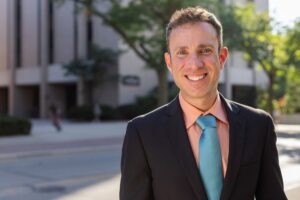
Atmospheric and Climate Science alum and University of Wisconsin–Madison Associate Professor Ángel F. Adames Corraliza has been awarded a prestigious MacArthur Fellowship, also known as the “genius grant. Adames Corraliza got his Ph.D. in atmospheric sciences from UW in 2016 and completed a master’s before that.
According to the MacArthur Foundation, Adames Corraliza “has made significant advances in quantifying the role and impact of moisture in tropical weather and climate phenomena, bringing us closer to a comprehensive dynamical theory of the tropical atmosphere.”
Read more about Adames Corraliza’s research on NPR, CoENV News, UW Madison News, and the MacArthur Foundation.
Former Grad Student Aodhan Sweeney and Prof. Qiang Fu’s Paper featured on EOS Editor’s Highlight
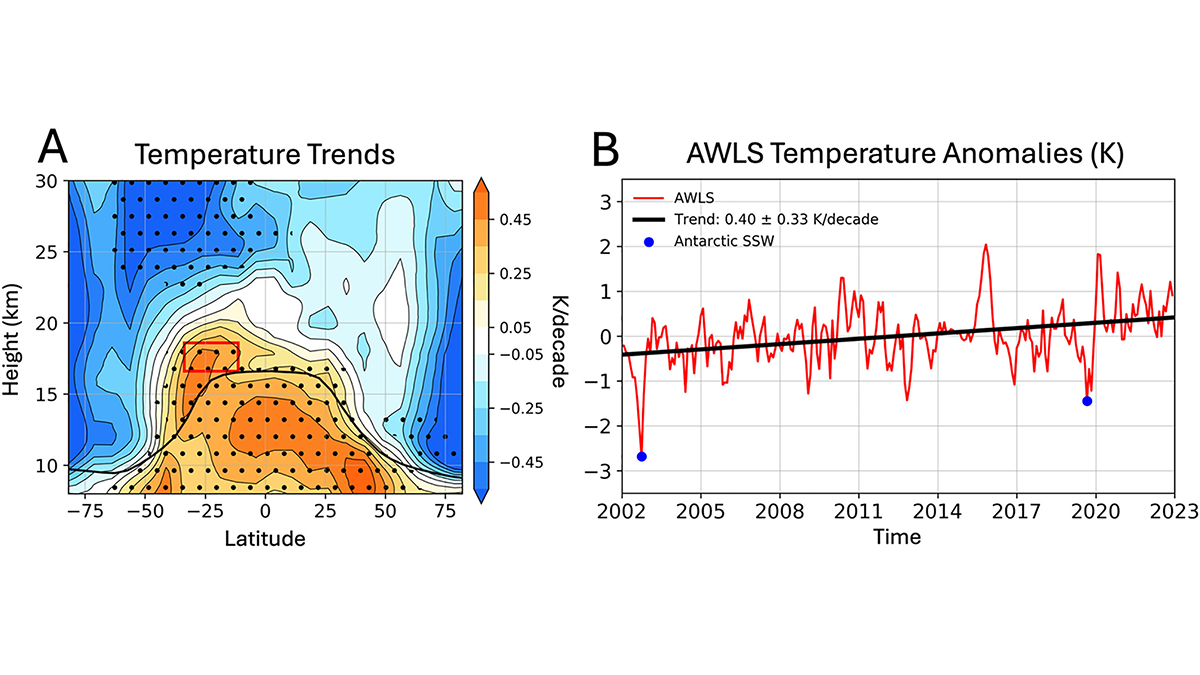
Former graduate student Aodhan Sweeney and Prof. Qiang Fu’s research paper, “Recent Warming of the Southern Hemisphere Subtropical Lower Stratosphere and Antarctic Ozone Healing,” is featured on EOS Editor’s Highlight. Less than 2% of all AGU papers are selected to be featured this way! The paper shows that a slowdown in stratospheric circulation warms the Southern Hemisphere’s subtropical lower stratosphere and cools Antarctica, masking ozone recovery. To learn more about the research, check out the Editor’s Highlight and publication.
Co-Authors: Susan Solomon, Stephen Po-Chedley, William J. Randel, Andrea Steiner, Pu Lin, Thomas Birner, Sean Davis, Peidong Wang